Showing posts with label Nonfiction. Show all posts

Friday, December 9, 2016

The Honey Makers, Written and Illustrated by Gail Gibbons

The Honey Makers

Written and Illustrated by: Gail Gibbons

Grades: K-3

This is a wonderfully illustrated book on the life of a honeybee and the colony. It shows the parts of a bee's body. It also shows the inside the hive. It details the entire process of how the bees collect the honey and store the honey to how the beekeepers collect the honey. It also show how the queen bee lays her eggs. It show the developmental stages of the honey bee. It tells bout the different worker bees. It lets you know how important bees are to pollination. It does give some latin terms but, defines them and shows how to pronounce them as well. This is a great book to get to know about bees and honey. 

Black Like Me, Written by John Howard Griffen

Black Like Me

Written by John Howard Griffen

Awards:
Anisfield-Wolf Book Award (1962)

Grades: 7-12

John Howard Griffen took special pills and light treatment to make his skin dark so he could pass for a "Negro" in 1959. His transformation was complete on October 28, 1959. He had his eyes opened to the way the Negro community was treated by the white people. How segregation worked and how the black community felt. He walked in their shoes. Mr. Griffen became friends with a shoe polisher and confided in him. The shoe man helped him out by showing him some of the right and wrong ways to do things. Mr. Griffen only spent 6 weeks traveling through New Orleans and Mississippi. He then published his book a year later. Mr. Griffin had to take his family and leave his hometown. They were threatened with everything from being tar and feathered to death. Even the people who sheltered them were threatened. The Griffen family eventually had to go into hiding but, he never stopped speaking out for civil rights. 

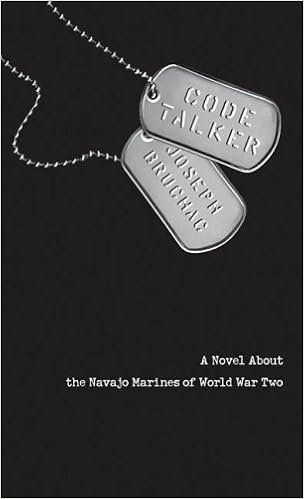
Code Talker: A Novel About the Navajo Marines of World War Two, Written by Joseph Bruchac


Code Talker: A Novel About the Navajo Marines of World War Two

Written by Joseph Bruchac

During WWII the people of the Navajo Nation wanted to serve their country. Then the military finds a unique opportunity to use their heritage. The Navajo are asked to use their language, a language they were told that was inferior and useless. When they were young they use to speak the language in secret so the language would not die out. The Army uses them in groups of two to send messages across the lines. The enemy can not decode the language because it is only known to the Navajo. Ned Begay is one soldier that is on the team. Ned and his Navajo team soon learn the respect of their superiors for their stamina. It is because of the Code Talkers, as they are called, that the war is turned. When the war is over the people of the United States no nothing of the Navajo Code Talkers. The military wants to keep them classified in case they need them in the future. Many years later they decide to declassify the Code Talkers. Ned and his colleagues are able to tell everyone about their experiences. Navajos can be just as good, just as important, and even more so, than their non-Indian colleagues, and that they are able to be so important because they have kept the language and background that the reservation schools tried to take away. If they would have taken it away it would have been a different WWII. 

Wednesday, December 7, 2016

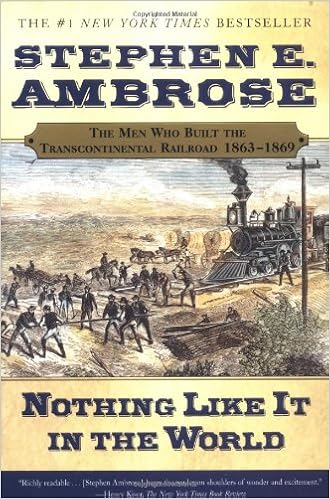
Nothing Like It In the World: The Men Who Built the Transcontinental Railroad 1863-1869 , Written by Stephen E. Ambrose

Nothing Like It In the World: The Men Who Built the Transcontinental Railroad 1863- 1869

Written by: Stephen E. Ambrose

Grades: 7-12

This book tells the story of how the Government put two companies against each other to race across the United States. The Union Pacific and the Central Pacific Railroads. It has black and white photographs to illustrate what the author is describing. It shows the huge efforts the people who built the railroad went through to get the track laid. Men were hurt and some died to lay the track. The Chinese, Irish, Black, and Confederate Soldiers working together. They had to go across rivers and through mountains. The surveyors finding a path through mostly wilderness to meet up in Promontory Summit, Utah. The last spike to be driven would be the golden spike and would connect the Eastern and Western United States. 

Salt in His Shoes: Michael Jordan in Pursuit of a Dream, Written by Deloris Jordan & Roslyn M. Jordan; Illustrated by Kadir Nelson

Salt in His Shoes: Michael Jordan in Pursuit of a Dream

Written by Deloris Jordan & Roslyn M. Jordan

Illustrated by Kadir Nelson

Grades: PreK-3

Awards:
Arkansas Diamond Primary Book Award (2002)
North Carolina Children's Book Award (2002)

This book is written by Michael Jordan's mom and aunt. It tells how Michael Jordan as a child was upset because he thought he would never grow tall enough to play basketball. Everyone was always taller and would shoot above his head. He asked his mom what he should do to grow taller faster. She told him to put salt in his shoes and pray every night. He thought she was kidding with him but, she did get her flowers in her garden to grow so he tried it. After a few months, nothing really changed and Michael was upset. He talked with his dad about it and his dad told him that it is not his height that will help him play basketball. His height would help but, it is hard work and determination that would make him the best player. Michael takes that to heart and goes on to play the next game with his friends. In that game he makes the winning shot and wins the game. Michael goes on to be a six foot six inch basketball player for the Chicago Bulls. Maybe the salt did work a little. 

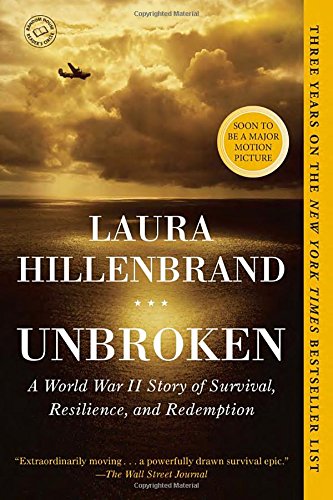
Unbroken: A World War II Story of Survival, Resilience, and Redemption, Written by Laura Hillenbrand

Unbroken: A World War II Story Of Survival, Resilience, and Redemption

Written by Laura Hillenbrand

Grades: 7-12

Awards:
Los Angeles Times Book Prize for Biography (2010)
Pennsylvania Young Readers' Choice Award Nominee for Young Adults (2014)
Indies Choice Book Award for Nonfiction (2011)
Dayton Literary Peace Prize Nominee for NonFiction (2011)
Abraham Lincoln Award Nominee (2015)
Goodreads Choice Award Nominee for History and Biography (2010)


Unbroken is the story of an Olympic runner, Louis Zamperini, who joins a bomber crew in WWII. While they are flying over the Pacific Ocean their plane goes down. Only Louis and two other crew members survive the crash and float in a raft for forty days. While they are floating one crew member dies. They live off of rainwater and the occasional fish. As they get close to land the two survivors are captured by the Japanese. The Japanese never tell America that they have two Americans in custody. America tells the families of the airmen that they are dead. Louis is treated at a hospital at first to recuperate. When he is able they transfer him to a prisoner camp to be executed but, because of his athletic frame he is spared. Louis is transferred to another prisoner camp and brutally beaten by the guards. One guard named the Bird has taken a serious dislike to Louis. The Bird beats Louis for everything. The Japanese even try to make Louis record pro Japanese propaganda ads but, he refuses and he is beaten. When America bombs Hiroshima, Louis is in Tokyo and cut off from all news. The prisoners in the camp do not even know the war is over until a guard tells them. Louis is brought back to the States where he is treated for his wounds. He goes back home to Torrence, California and his family. Louis has night terrors and flashbacks about his time in prison. He drinks in an attempt to rid himself of the memories. It only makes his family life worse. Eventually, he goes into a Billy Graham tent meeting and finds Jesus. Louis starts to heal on the inside and forgive the Bird. He finds out the Bird is still alive. Louis goes to Japan. He want to meet with him and tell him he forgives him but, the Bird refuses to see him. 

Saturday, November 26, 2016

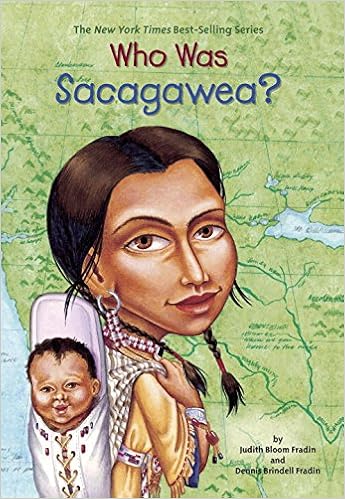
Who Was Sacagawea? Written by Judith Bloom Fradin, Illustrated by Nancy Harrison & Val Paul Taylor

Who Was Sacagawea?

Written by Judith Bloom Fradin

Illustrated by Nancy Harrison & Val Paul Taylor

Grades: 3-7

Without Sacagawea the Lewis and Clark expedition would have been a failure. The western United States would have taken a lot longer to map. Sacagawea was sixteen years old and had a baby on her back when she made her remarkable journey. She would lead the team on a 4500 mile trek by foot, canoe, and horse. America remembers her in many ways and over 200 years later on a gold coin. 

This book gives a wonderful background to Sacagawea before she lead the expedition with Lewis and Clark. It is written in a way that the elementary students can understand and take interest in.  

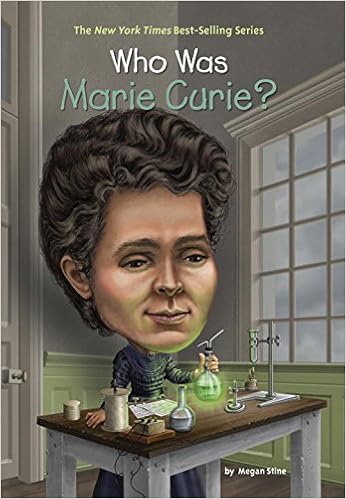
Who Was Marie Curie? Written by Megan Stone, Illustrated by Nancy Harrison & Ted Hammond

Who Was Marie Curie?

Written by Megan Stone

Illustrated by Nancy Harrison & Ted Hammond

Grades: 3-7

Marie Curie was born in Poland in 1867. She was not allowed to go to University with the boys. It was forbidden. Marie had to move to France. She enrolled to study Physics and Mathematics.  She also met her husband, Professor Pierre Curie. They became one of the best scientific teams. They found two elements and won a Nobel Peace Prize in 1903. Marie won another by herself in 1911. She died in 1934 because she was exposed to so much toxic radiation. 

In the classroom these books are wonderful! What would have happened if she would not have gone to France and enrolled in school? What if she would have given up her dream? The things the world would have missed out on. These books are great for upper elementary. They make biographies and history great to read.

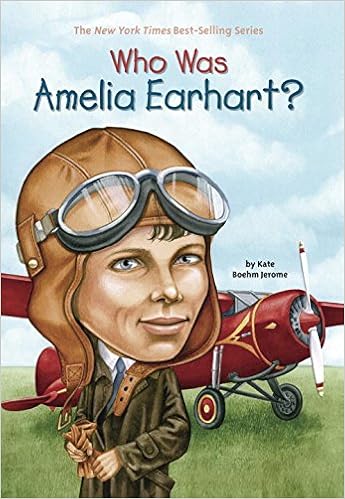
Who Was Amelia Earhart? Written by Kate Boehm Jerome, Illustrated by: Nancy Harrison & David Cain

Who Was Amelia Earhart?

Written by Kate Boehm Jerome

Illustrated by Nancy Harris & David Cain

Grades: 3-7

Amelia Earhart was one of the first women pilots. In 1932, she became the first woman to fly solo across the Atlantic Ocean. In 1935, she became the first woman to fly across the Pacific Ocean. This book documents her early years to her mysterious disappearance in 1937 while attempting to fly around the world. 

This book can be used in the classroom to teach upper elementary students about Amelia Earhart. It is written in a style very easy for them to read and understand.